From Copilot to Co-worker: How Agentic AI is Automating 80% of Office Workflows
Discover how agentic AI workflows are transforming workplaces with multimodal LLMs explained, open-source vs closed-source AI models, AI self-verification systems, and Generative Engine Optimization alongside AI ethics and governance 2026 frameworks.
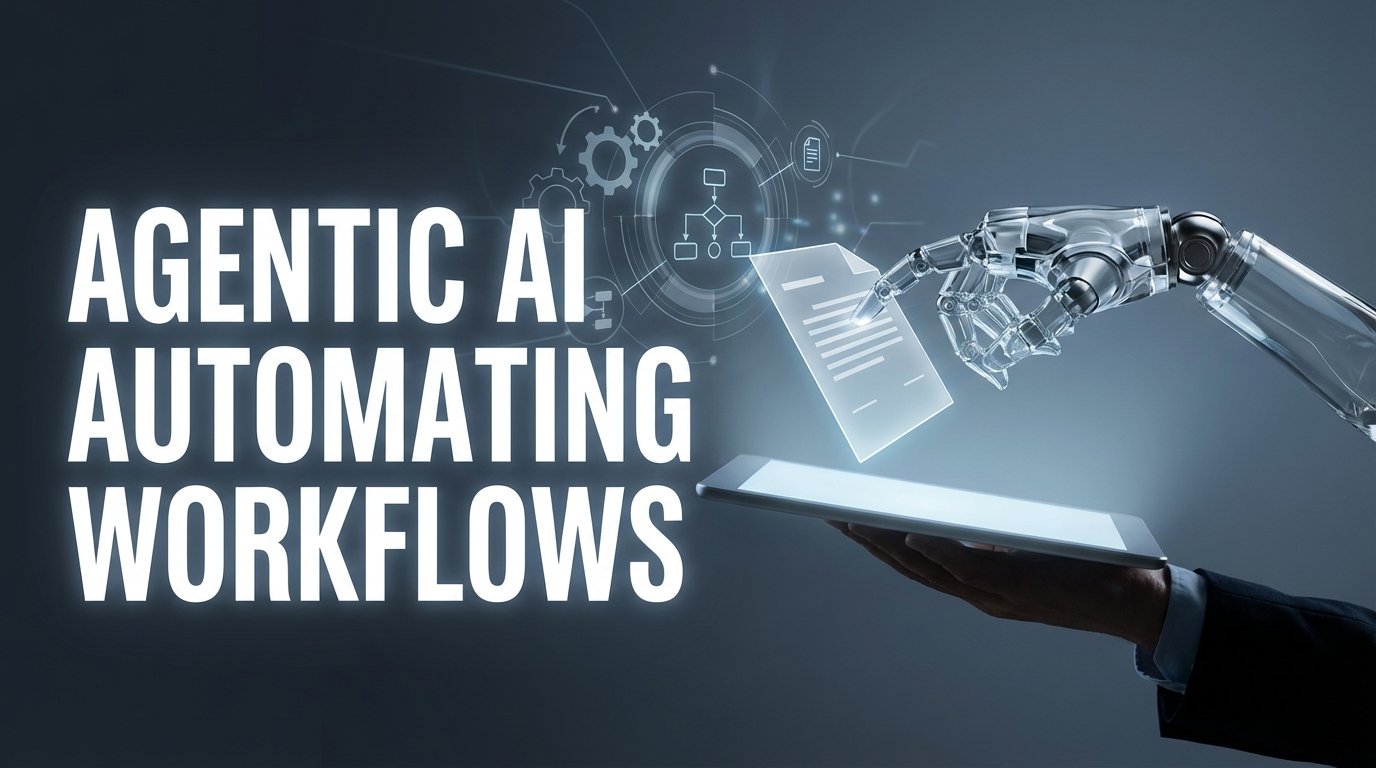
The workplace automation landscape has undergone a fundamental transformation as artificial intelligence systems evolve from passive tools into active participants in business operations. Recent industry analyses suggest that agentic AI workflows now handle approximately 80 percent of routine office tasks, marking a significant departure from traditional software automation. This shift represents not merely an incremental improvement in productivity tools but a restructuring of how organizations approach knowledge work.
Understanding Agentic AI Workflows
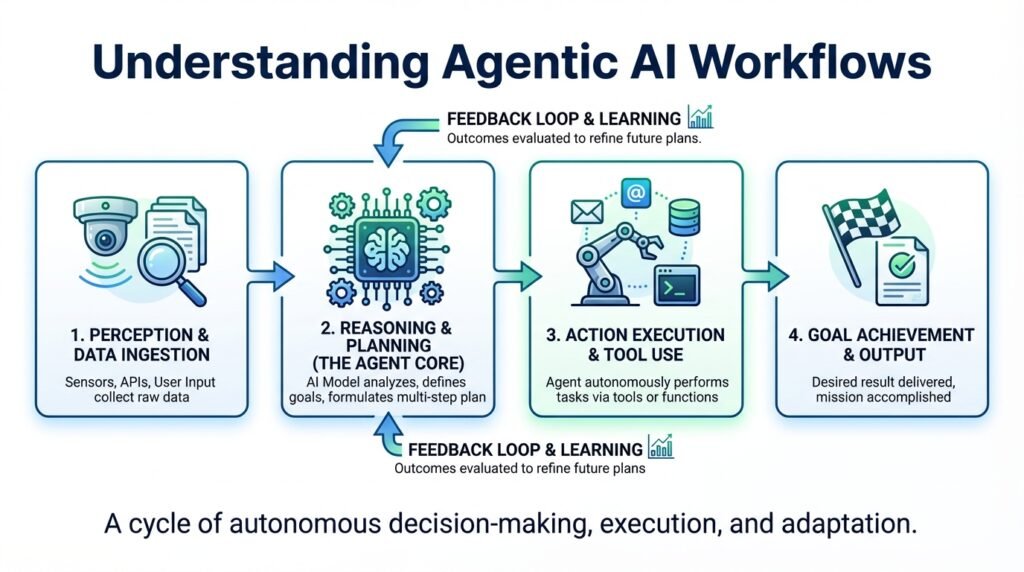
Agentic AI workflows differ substantially from conventional automation systems through their capacity for autonomous decision-making and adaptive problem-solving. Unlike rule-based automation that executes predefined sequences, agentic AI workflows analyze contexts, evaluate options, and adjust approaches based on outcomes without requiring constant human intervention.
These systems manage complex task chains that previously demanded human oversight at multiple stages. Document processing, data analysis, meeting coordination, report generation, and interdepartmental communication now operate through agentic AI workflows that interpret instructions, gather necessary information, and execute multi-step processes. The technology monitors its own performance, identifies bottlenecks, and optimizes procedures over successive iterations.
Organizations implementing agentic AI workflows report significant reductions in task completion times and error rates. The systems handle administrative responsibilities that traditionally consumed substantial portions of employee time, allowing human workers to focus on strategic initiatives that require creativity, judgment, and interpersonal skills, which current AI systems cannot replicate.
Multimodal LLMs Explained: The Foundation of Advanced AI
The capabilities enabling sophisticated agentic AI workflows stem largely from advances in multimodal LLMs, explained as language models that process and generate content across multiple data types. Traditional language models operated exclusively with text, but multimodal LLMs explained in technical terms can simultaneously interpret text, images, audio, video, and structured data.
When multimodal LLMs explained in practical applications are considered, their versatility becomes apparent. A single system can read written instructions, analyze spreadsheet data, interpret charts and diagrams, transcribe meeting recordings, and generate comprehensive reports that synthesize information from all these sources. This cross-modal understanding enables agentic AI workflows to handle diverse office tasks without requiring specialized tools for each data type.
The architecture of multimodal LLMs explained by researchers, involves unified embedding spaces where different media types are converted into compatible representations. This approach allows the models to identify relationships between visual elements in presentations and corresponding data in financial documents, or to connect spoken directives in recordings with written policy documents.
Open-Source vs Closed-Source AI: Implications for Enterprise Adoption
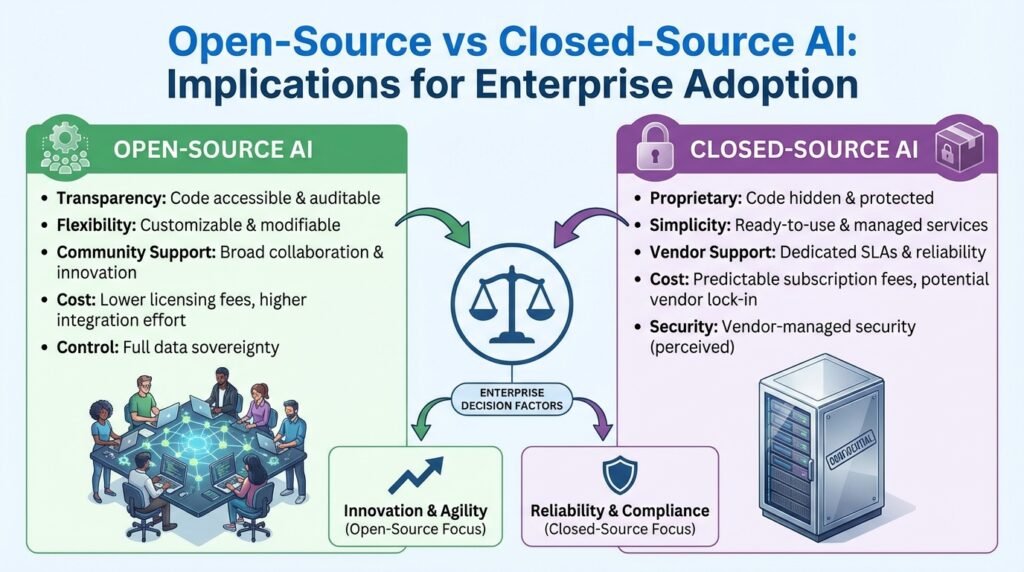
The debate surrounding open-source vs closed-source AI models significantly influences how organizations implement agentic systems. Open-source vs closed-source AI considerations involve technical capabilities, customization potential, security implications, and long-term cost structures.
Open-source vs closed-source AI discussions often center on transparency and control. Open-source models allow organizations to examine underlying code, modify architectures for specific needs, and deploy systems within private infrastructure. This approach appeals to entities with strict data governance requirements or highly specialized use cases requiring model fine-tuning.
Conversely, closed-source AI systems typically offer more sophisticated capabilities developed through extensive proprietary research and computational resources. These platforms provide comprehensive support, regular updates, and often superior performance on complex tasks. The open-source vs closed-source AI choice frequently depends on organizational priorities, balancing customization flexibility against cutting-edge performance.
AI Self-Verification: Ensuring Accuracy and Reliability
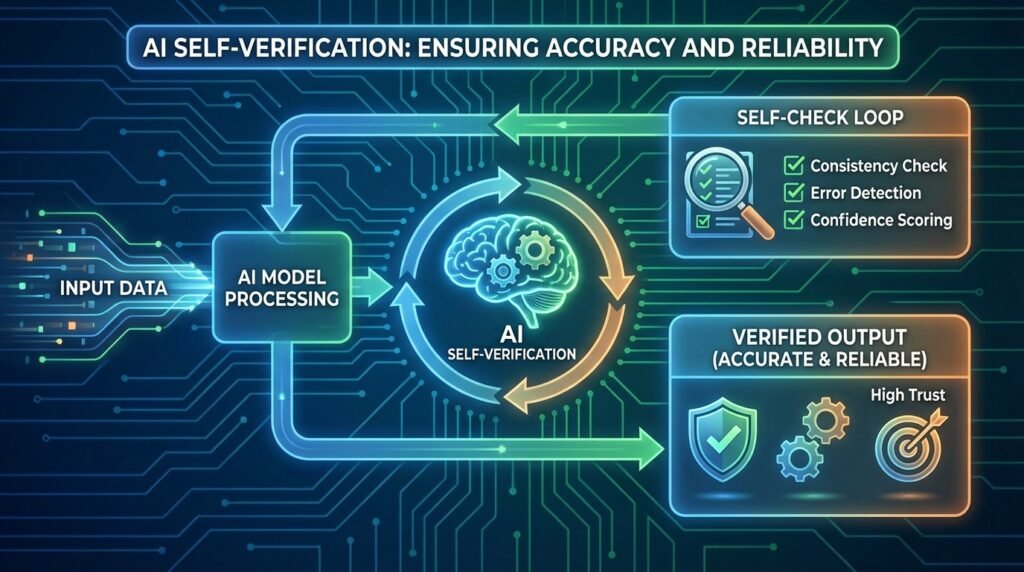
As agentic AI workflows assume greater responsibility for business-critical tasks, AI self-verification mechanisms have become essential components of deployment strategies. AI self-verification refers to systems that evaluate their own outputs for accuracy, consistency, and alignment with specified objectives before presenting results or executing actions.
Advanced AI self-verification techniques employ multiple complementary approaches. Systems generate answers through different reasoning paths and compare results for consistency. They consult reference materials to confirm factual claims. They apply logical frameworks to identify contradictions or implausible conclusions. Some AI self-verification implementations use separate specialized models to critique and validate outputs from primary systems.
The development of robust AI self-verification capabilities addresses critical concerns about deploying autonomous systems in professional environments. Organizations require confidence that AI-generated analyses, recommendations, and communications meet quality standards without exhaustive human review of every output.
Generative Engine Optimization: Adapting Content Strategies
The proliferation of AI systems that generate answers rather than simply ranking links has spawned a new discipline called Generative Engine Optimization. GEO focuses on structuring information so that AI systems accurately retrieve, interpret, and present content when responding to user queries.
Generative Engine Optimization differs from traditional search engine optimization by emphasizing factual clarity, authoritative sourcing, and semantic structure over keyword density and backlink profiles. Content optimized through GEO principles uses clear attribution, provides comprehensive context, and organizes information in hierarchies that AI systems can efficiently parse and synthesize.
Organizations developing documentation, knowledge bases, and public-facing content increasingly consider Generative Engine Optimization principles during creation. This approach ensures that when agentic AI workflows or consumer-facing AI assistants access organizational information, they retrieve and represent it accurately.
AI Ethics and Governance 2026: Regulatory Frameworks Emerge
The rapid expansion of agentic AI workflows has accelerated the development of AI ethics and governance 2026 frameworks across multiple jurisdictions. AI ethics and governance 2026 standards address transparency requirements, accountability mechanisms, bias mitigation, data privacy, and human oversight protocols.
Recent AI ethics and governance 2026 legislation mandates that organizations maintain detailed records of AI decision-making processes, particularly in systems affecting employment, financial services, and public administration. These frameworks require regular audits of AI systems for discriminatory outcomes and establish liability structures when autonomous systems cause harm.
Industry consortia have developed voluntary AI ethics and governance 2026 standards that exceed regulatory minimums, establishing best practices for responsible AI deployment. These guidelines emphasize human-in-the-loop oversight for consequential decisions, transparent communication about AI involvement in customer interactions, and ongoing monitoring of system behavior in production environments.
The Evolving Workplace Dynamic
The integration of agentic AI workflows represents more than technological adoption. It necessitates reconceptualizing job roles, redefining productivity metrics, and establishing new collaborative patterns between human workers and AI systems. As these technologies continue advancing, the distinction between tool and colleague becomes increasingly nuanced, requiring thoughtful approaches to implementation that preserve human agency while leveraging AI capabilities.
You can use Copilot and leave a comment. Learn more about agentic ai and increase your knowledge. You can also earn by using AI tools.